
Sources for Past Orem Residents
One address can leave traces in several eras. The table below keeps the source, years, place, and evidence type separate. The Recorder is the ownership backbone. Directories, census pages, and newspapers add household or community context. City permits and historical aerial references can date a structure, but not prove who held title.
| Source | Years it covers | Where held | What it shows |
|---|---|---|---|
| Utah County deeds and official records | 1870-present | Recorder online, office, books, microfilm, scans | Transfers, mortgages, liens, plats, parties, legal descriptions |
| Recorder abstracts | 1870-Sept. 1985, overlapping computer range | County Recorder routes | Land location and instrument context |
| Utah City Directories | Broad facets 1867-1990; local leads 1950, 1964-67, 1973 | Marriott, FamilySearch, Orem Library | Dated names and addresses |
| Orem Geneva Times | 1945-2009 reported coverage | Orem Library / Utah Digital Newspapers | Obituaries, notices, civic and family clues |
| Federal census | 1790-1950 public | NARA and partners | Household, age, relationship, birthplace, address |
| Orem permits and code | Current portal; older range not stated | City portal or GRAMA | Work, inspection, applicant, compliance clues |
The State Archives capture adds early Utah County birth, death, and marriage-register context to the address trail.
Orem Previous Residents Begin With a Parcel
Use the Utah County Assessor or land-record address search to find the current parcel. Save owner, situs, mailing address, serial, legal description, subdivision, and any available value or map fields. The mailing address may belong to a trustee, estate, or organization and may sit outside Orem. It is a useful clue, not proof of where a person lives.
Open the parcel in the county map and compare its boundary, aerial context, legal description, and historic parcel entry view. Historic Parcel reflects entry into the online property system, not the recording date. Preserve today’s identifiers before going backward, since an older directory may use a different street form.
- Chain of title
- The linked sequence of recorded transfers and interests for a parcel.
- Grantor
- The party transferring a property interest.
- Grantee
- The party receiving that interest.
- Legal description
- The recorded land description that can bridge an address across time.
Trace Orem Previous Residents by Deed
Utah County official records run from 1870 to the present. The alphabetical name index changes from handwritten to computerized in January 1978. Abstracts have a separate handwritten or typed run through September 1985 with an overlapping computerized range. A failed modern name search may therefore reflect the wrong index path rather than a missing deed.
- Search the current owner or party and note entry number, year, book, page, instrument type, and date.
- Read the scanned deed or abstract and copy the grantor, grantee, legal description, parcel serial, and restrictions exactly.
- Search the seller as an earlier grantee or search the serial, legal description, book/page, and entry/year.
- Switch to the older handwritten index, abstract, office, book, or microfilm route when the computer index ends.
- Repeat until the chain reaches the period that the directory, census, or newspaper can test.
Recorder copies are listed at $1 per page; standard recording is $40 per document. The Recorder FAQ warns that its records are not a universal lien or judgment search. A title search or legal interpretation is a different service.
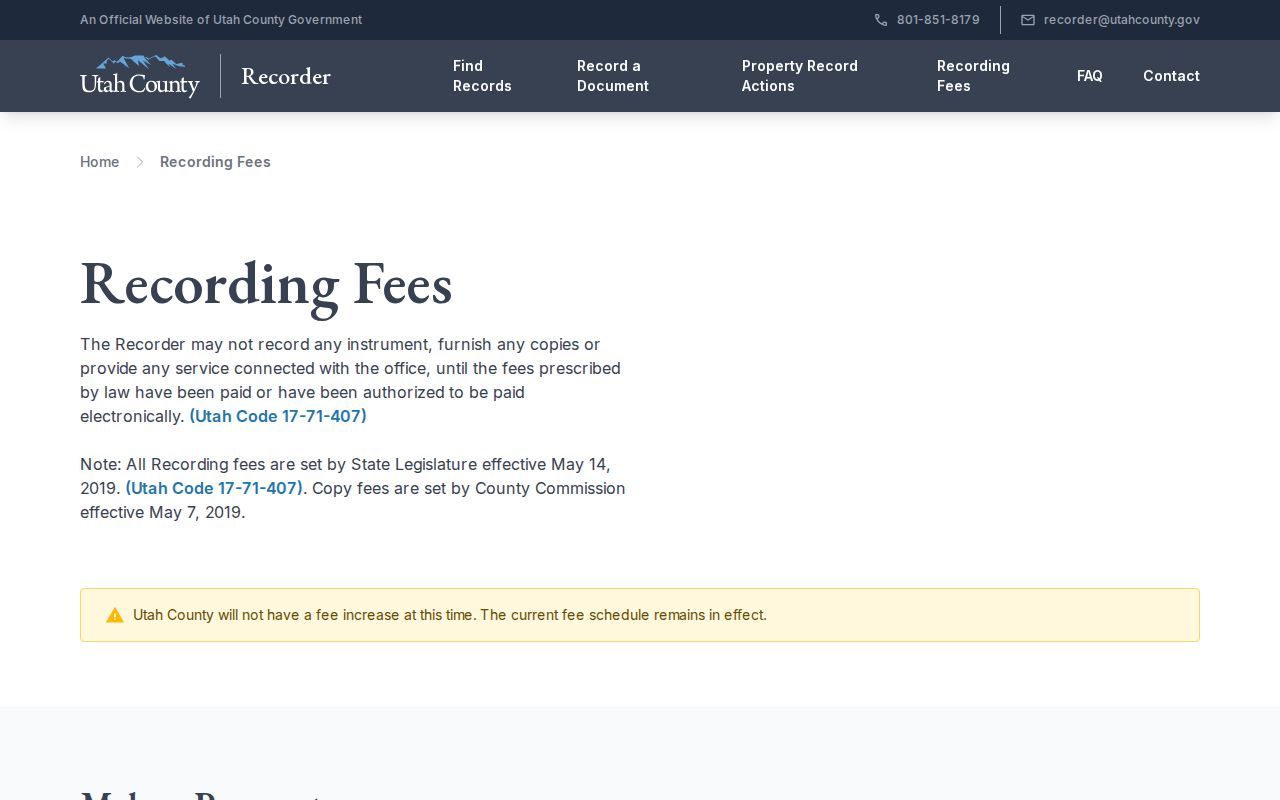
The fee-page image helps distinguish an index lead, an ordinary copy, and a certified or recorded document request.
Orem Previous Residents and the 1978 Split
The Recorder’s 1870-to-present coverage sounds like one smooth search, but the name index is not uniform. Handwritten alphabetical material runs through January 1978, and computerized indexing begins there. Abstracts continue on their own path through September 1985, with an overlapping online range around May 1980. Search names, legal location, instrument type, entry, book/page, and parcel serial together.
Use a name variant, initials, trust or estate name, and grantor or grantee role. An abstract may supply land-location context when a party-name search does not. Ask the office or use microfilm and books when the web form stops. Document the negative search with the route, date, terms, and coverage rather than writing “no record exists.”
Pair Orem Previous Residents With Census Years
The public census gives the household layer. Under the 72-year rule, 1950 is public and 1960 is scheduled for April 2032. A 1950 page can show address, name, age, sex, race, marital status, household relationship, birthplace, and naturalization status. Compare that page with the nearest directory year, but allow for a move between compilation, publication, and enumeration.
- Copy the old address and name exactly from the directory or deed.
- Find the nearest census page and compare household members, ages, birthplace, spouse, and neighbors.
- Search the next available directory for the same surname, initials, street, and business line.
- Use a deed date, newspaper notice, obituary, or probate record to explain an arrival or departure.
The Orem directory book covers the collection leads themselves. This page uses those leads to follow one address backward.
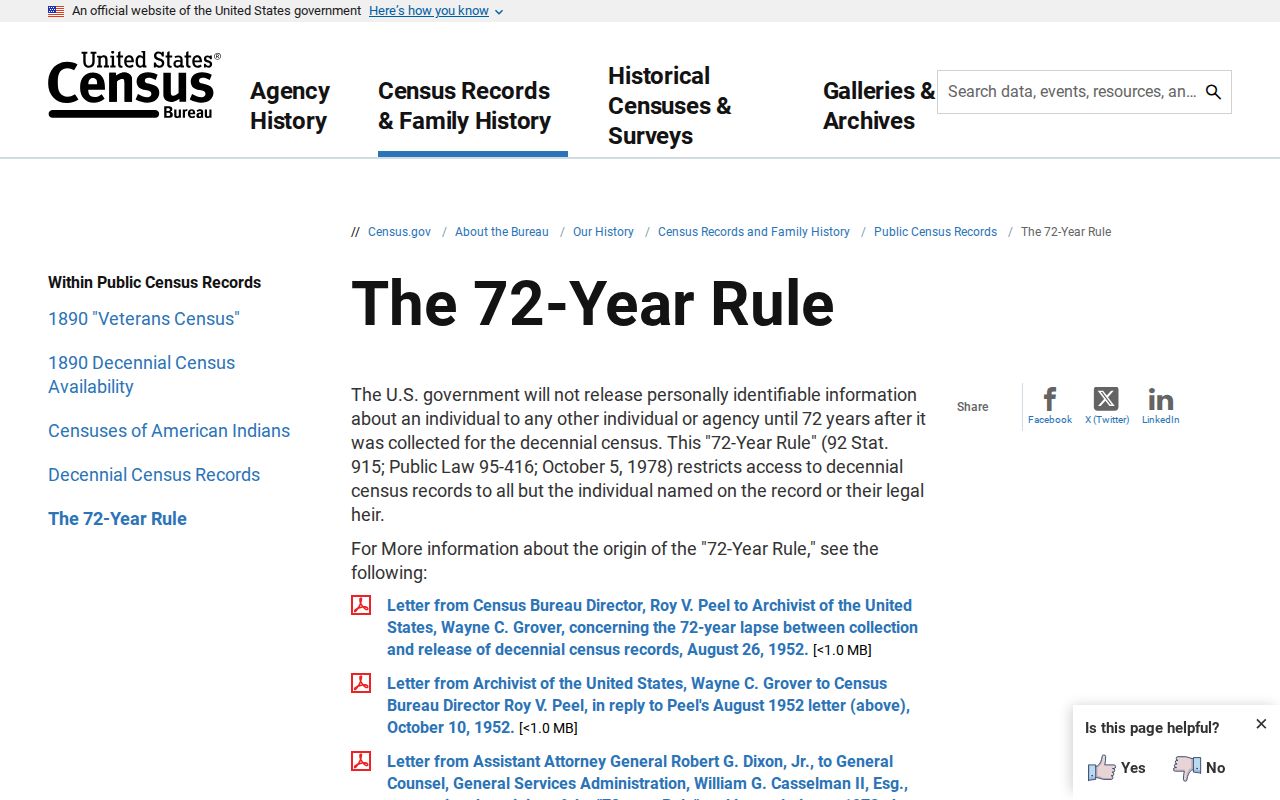
The census-release image marks the 72-year access rule used to pair a historic household with a directory.
Orem Previous Residents in Newspapers
The Orem Geneva Times archive, reported with 1945-2009 coverage, can connect a former address to an obituary, legal notice, family announcement, civic meeting, school activity, or business advertisement. Search both name and address. Save the issue date, page or image, notice type, and named relationships. An obituary can point to a cemetery or probate case, but it is an authored notice and should be cross-checked.
Probate and court records can identify an estate, representative, heir, or transfer date. Xchange’s public case history is generally complete for Utah district matters since the late 1990s, while older or protected material varies. The Orem Cemetery has burial-rights and transfer paperwork, but no official public name-search database was located. Use the office or form route rather than claiming an online roster.
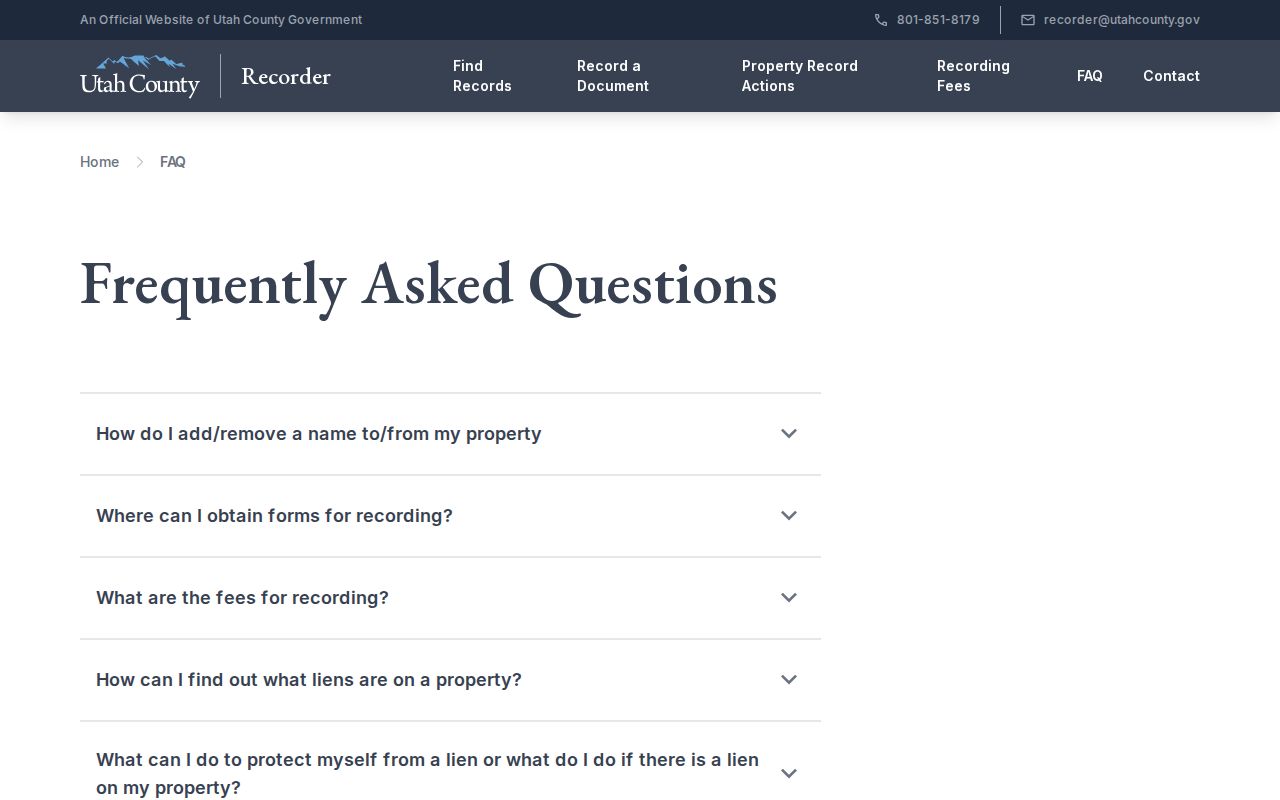
The Recorder FAQ capture reinforces the need to separate recorded ownership from a complete household history.
Use Orem’s Verified History Books
UVU’s Orem Centennial Books preserve homesteader profiles, historic homes, tours, sites, and city chronology. They can explain why a parcel appears on a 1946 aerial, in a 1950 directory, or in a later property report. The material is historical context, not a substitute for an original deed or directory scan.
Orem Library is the practical request point for local-history books, yearbooks, newspaper microfilm, reverse directories, obituary indexes, and catalog help. No complete official Orem house-history guide or dedicated reverse-directory year run was located. Ask for a specific address, surname, date range, and format. UVU Archives and the Utah Historical Society can add community papers, oral histories, photos, architecture, manuscripts, and newspapers under their access rules.
Sanborn and Aerial Clues
Sanborn fire-insurance maps can show building footprints, materials, street names, and nearby uses, but no Orem-specific sheet or year was verified in the inspected official catalogs. Do not substitute a Provo or Salt Lake sheet. Check University of Utah catalog and digital-library routes, and confirm city and year before citing a map.
Historic aerials and an Orem-area environmental report supply a more concrete local lead. The report says aerials showed dwellings and outbuildings from at least 1946, an auto-repair shop in 1964-67, and city-directory references. Pair structure dating with parcel legal description and deed dates. Aerial evidence dates what was visible, not who occupied it.
Bridge Old Street Wording
Orem’s current numbered grid includes 2000N, 1600N, 1200N, 800N, 400N, Center, 400S, 800S, 1200S, University Parkway, 1600S, and 2000S, with Geneva, Main, State, Orem Boulevard, and numbered cross streets. This can help test an old line against present geography.
No official Orem-wide renumbering or renaming year was located. Preserve the old street form, then compare plats, deeds, parcel serial, directories, aerials, and county GIS. Do not turn a plausible street-grid match into a documented readdressing event.
Past Residents Have Privacy Limits
A deed can show an owner, but not every occupant. A directory can omit children, boarders, renters, or people who moved before publication. Safe at Home participants use substitute addresses. Vital records, court files, voter data, DMV records, utilities, and delivery records each have their own restrictions. The best house-history result states what the source proves and what it cannot.
Lawful house history. Use previous-resident research for genealogy, restoration, estate work, and ordinary personal history. Do not use an address trail to stalk, monitor, intimidate, threaten, or harm anyone.
For the current street chain, use the Orem street directory. For one person, compare the property, court, voter, vital, and historical routes in the Orem resident lookup.