
Where Orem Resident Searches Begin
A useful Orem residents directory search has a starting fact and a clear endpoint. If the fact is an address, begin with the Utah County address search and then open the parcel map. If the fact is a name, try the county owner search, but remember that an owner is not every person at the parcel. A question about registration belongs to the Utah Voter Search, which matches first name, last name, date of birth, street, city, and ZIP.
Use the record trail in this order when the goal is a current identity check: county property context, an individual voter match, a public court index, then a recorder document. For a family-history question, move sooner to newspapers, directories, census pages, cemetery paperwork, and probate clues. A failed online search may reflect a private voter, a different spelling, an older index, or a record held at a counter rather than proof that the person or event never existed.
- Write down the name, address, date range, and the question the record must answer.
- Search the Utah County parcel or owner route and save the serial and legal description.
- Use the Utah voter form only for a specific, legitimate person match.
- Check Xchange, vital-record rules, or business and license systems as the question requires.
- For older or missing material, ask Orem Library, Utah State Archives, or the custodian for a narrow GRAMA request.
Orem’s Records Map
Orem is in Utah County, but Provo is the county seat and the practical in-person hub for the county Recorder, Clerk, elections office, and health counter. Orem keeps its own city records, justice court, police records, cemetery files, building and planning functions, and civic maps. Separating the city and county roles prevents a common wrong turn: an Orem city request will not replace a county deed search, and the county Recorder is not a universal court or lien database.
For Orem municipal material, the Orem City Recorder holds ordinances, resolutions, minutes, contracts, elections, and city records. The Orem records request page is the route for a specific city record. Orem Justice Court is at 97 E Center St and can be reached at 801-724-3900. Utah County Health’s local birth and death counter is at 88 W 100 N in Provo, phone 801-851-7005. These are separate custodians with different access rules.
Start With the Property Trail
The county land-record system is often the fastest bridge from a street to a named owner. Its owner form accepts a LAST, FIRST MIDDLE format and offers All Records, Current Records Only, and Never Valid Only choices. The address form breaks a location into number, direction, street, street type, and city or location. The parcel map adds the serial number, boundary, legal description, mailing context, and map geometry. Save the parcel serial because it can remain useful when an address is written differently in an older directory.
The distinction between situs and mailing address matters. Situs is the physical Orem parcel. Mailing address is where tax notices go. They can differ for a trustee, estate, organization, or owner who lives elsewhere. A property card may show a value, tax, appraisal, subdivision, exemption, and owner link, but it does not prove that every household member lives there. The Utah County Parcel Map is reference-only and without warranty, so a deed image remains the better source for a legal transfer.
Here is the field pattern to expect from the county owner and address routes:
| Field | What to enter or learn |
|---|---|
| Name | LAST, FIRST MIDDLE, with spelling variants when needed |
| Address | Number, direction, street, type, and Orem as city/location |
| Parcel bridge | Serial number, legal description, situs, and mailing context |
| Record scope | Current, all, or never-valid records where offered |
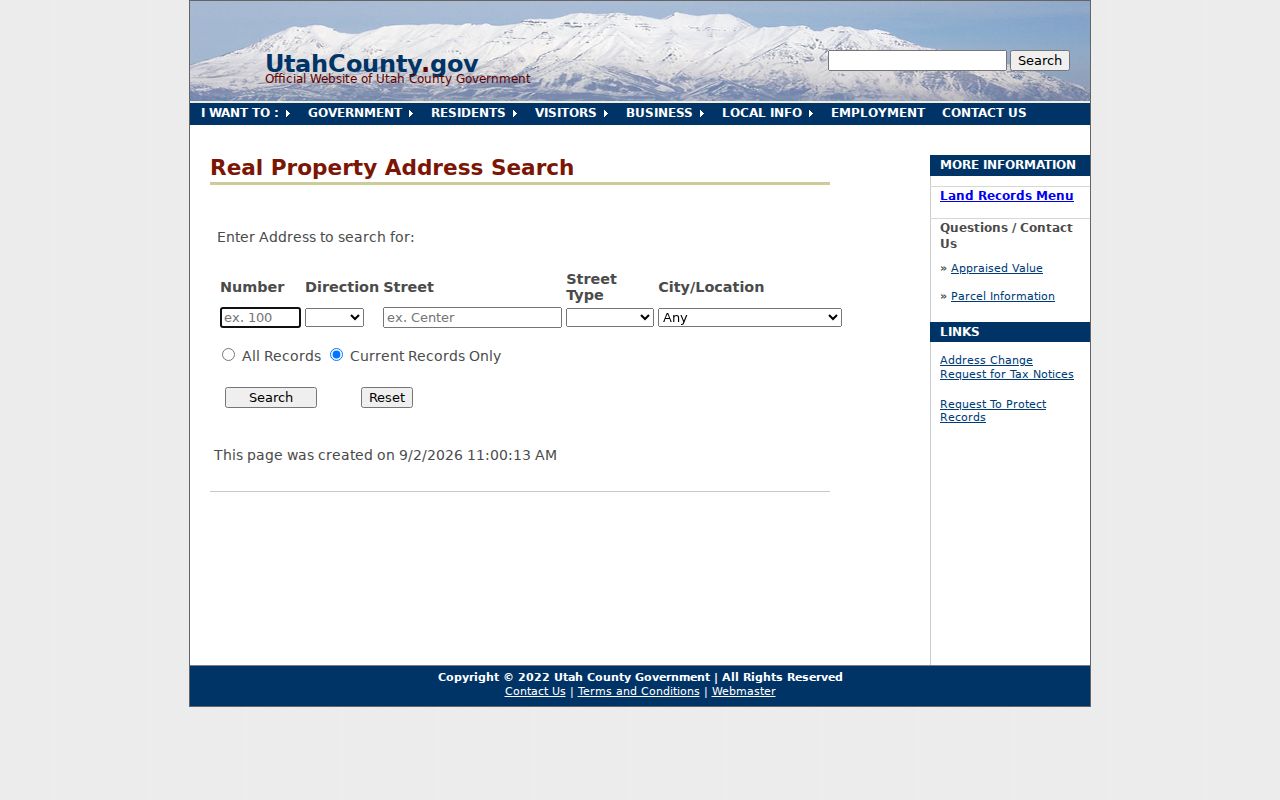
The county address form image shows why each part of an Orem street address should be kept separate during a search.
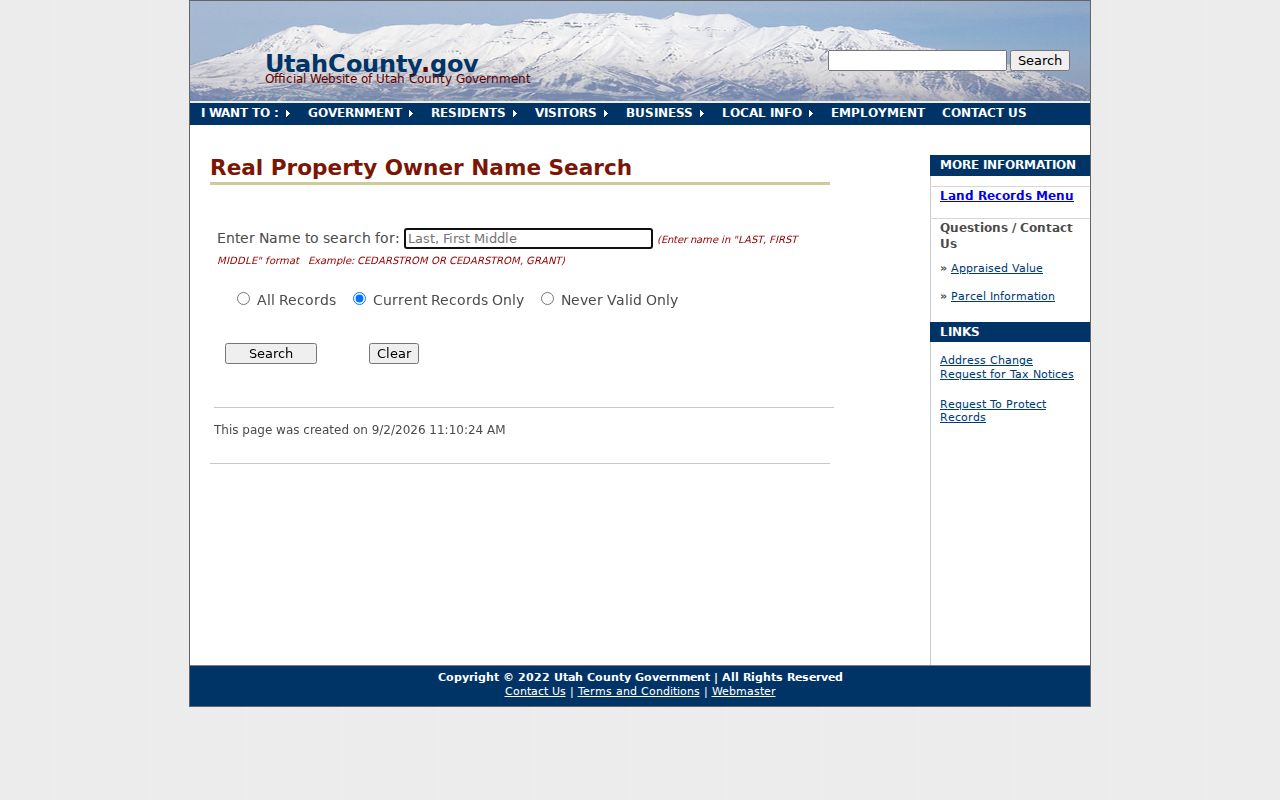
The owner-name capture shows the alternate route when a person’s name is known before the parcel.
What the Utah Voter Form Confirms
The individual Utah Voter Search is a six-field match, not a street-wide resident roster. It asks for first name, last name, date of birth, street address, city, and ZIP, then runs a match. The form does not expose a bulk browse button. A no-match can result from an address change, a spelling difference, a private or At-Risk status, or a recent registration update.
| Public route | Useful answer | Limit |
|---|---|---|
| Individual lookup | Registration and polling context for the entered person | Requires a person-specific match |
| County voter file | Name, address, precinct, districts, party, optional vote history | Certification, fee, exclusions, and use rules apply |
| Precinct map | District and vote-center geography | No names |
Utah voter data can include legal name, voter ID, age range, residential and mailing address, precinct, districts, party or unaffiliated status, activity status, last update, and vote history. Full date of birth, Social Security number, driver or state ID, email, phone, and signature are private fields. At-Risk voters are excluded from public files. Utah SB153 changed privacy operations on May 25, 2026, so check the current current voter privacy information before relying on a field.
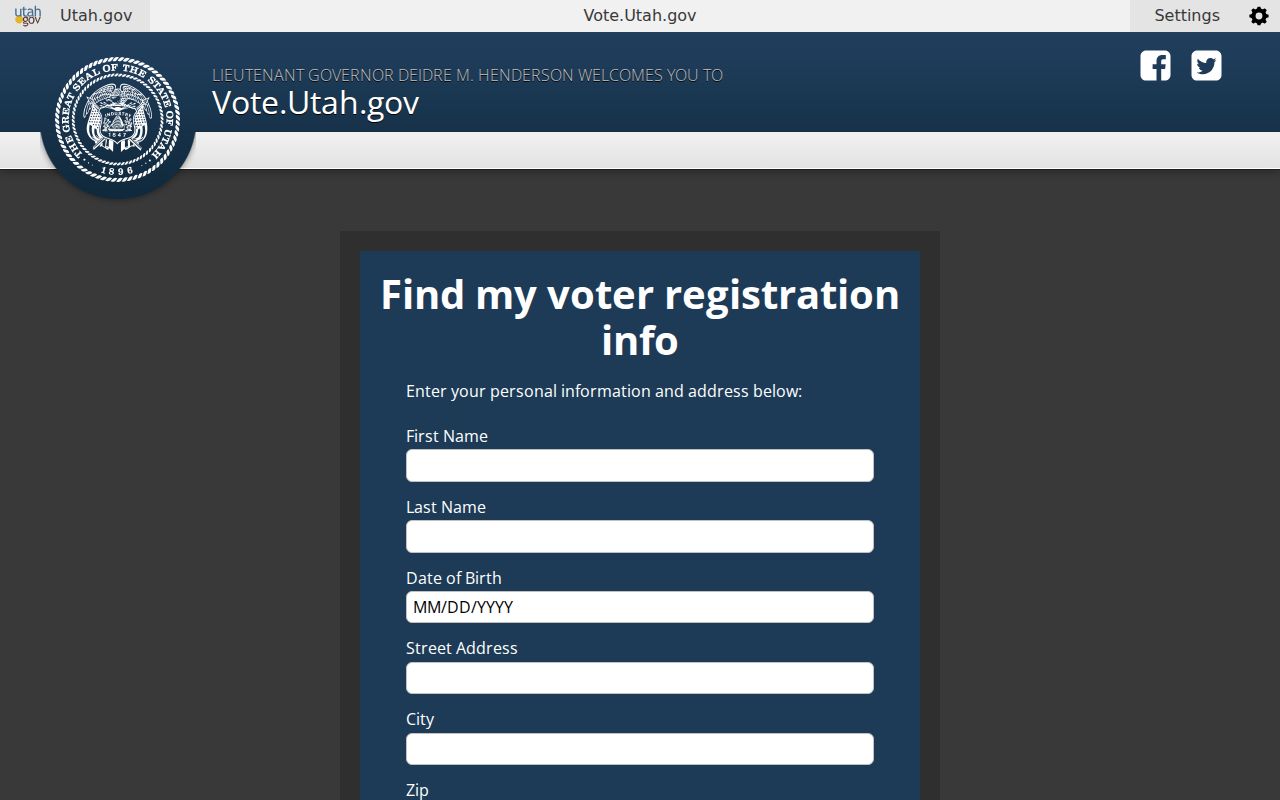
The voter-search image is a reminder to use a name and address match, not an assumption that every person at an address appears.
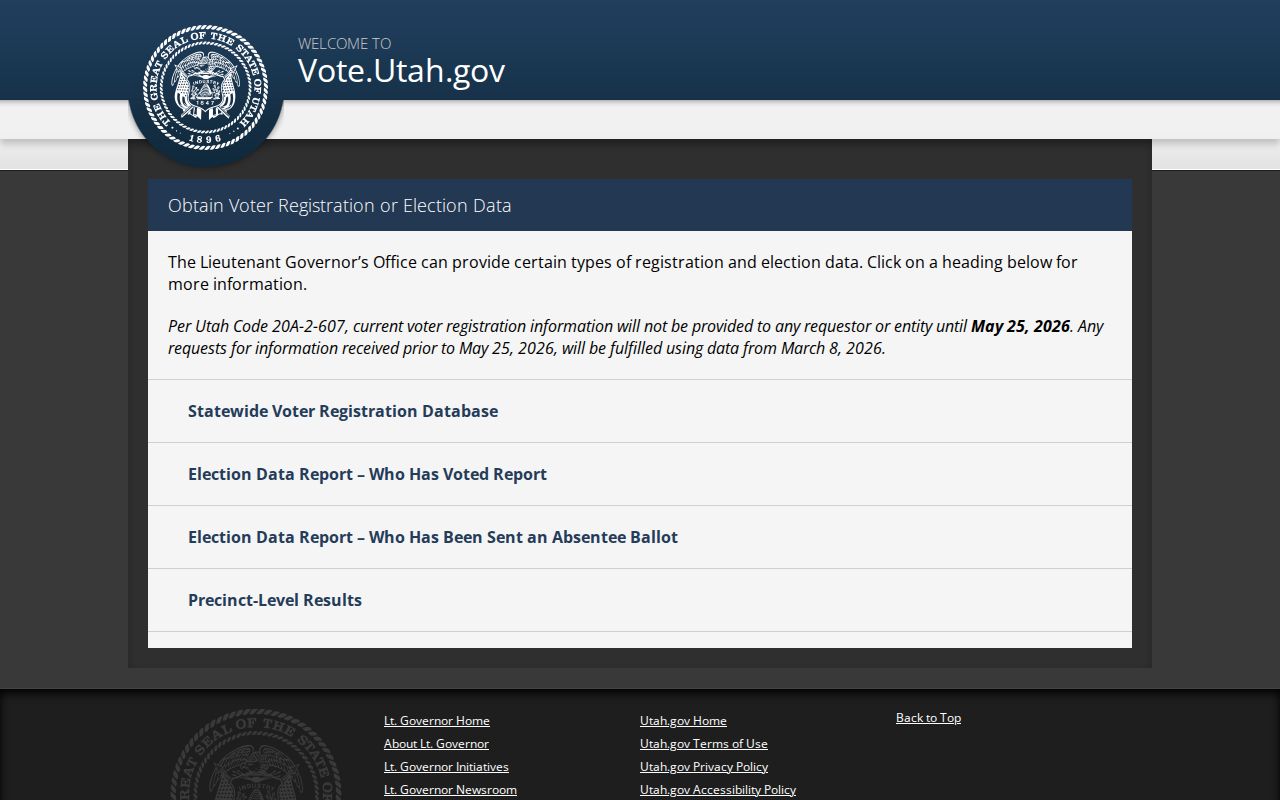
The voter-data capture covers the separate file-request route, where purpose certification and protected-field exclusions apply.
Reading a Public Court Result
When the question concerns a public case, use Utah Courts Xchange or the Orem Justice Court route. Xchange can show court and location, caption, case number, case type, parties and roles, attorneys, judge, proceedings, hearing dates, docket entries, documents, judgments, and outcomes where public. District coverage is generally complete since the late 1990s; justice coverage varies. Electronic district documents filed since July 1, 2010 are generally available, but a courthouse terminal or clerk request may be needed for older material.
Disambiguate a name with court, case number, filing date, attorney, party role, and disposition. Sealed adoption, juvenile, expunged, child-welfare, civil-commitment, and protected domestic or civil matters may be absent or blocked. Xchange is a case-history source, not a complete criminal-history certificate. Federal matters use PACER, whose current September 2026 rate is $0.10 per page, usually capped at $3 per document, with a $30 quarterly waiver.
For a separate public-safety record, the Utah registry conditions explain the search warning and ban harassment, threats, and stalking. A registry entry is not a court docket and should not be treated as one.
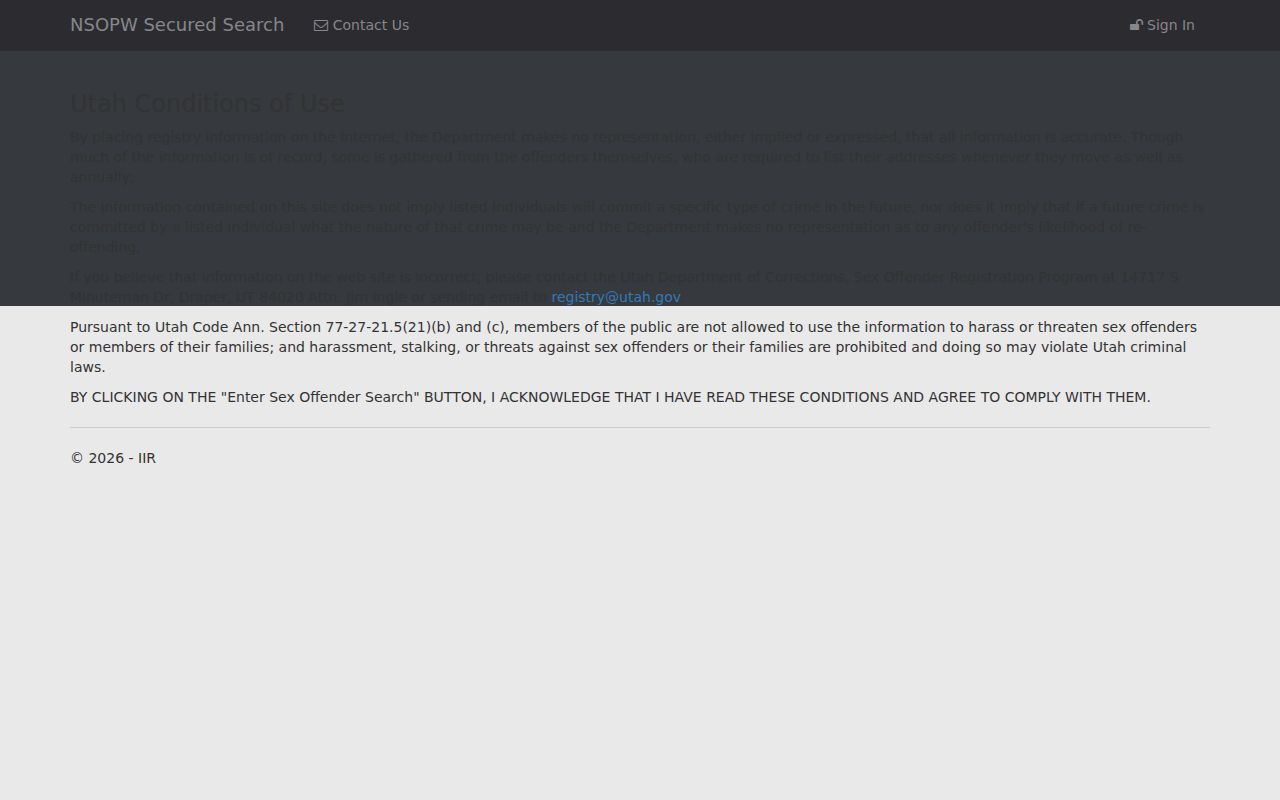
The registry image reinforces that a public safety lookup carries its own legal-use terms.
Vital Records Have Access Gates
Birth, death, marriage, and divorce records prove events, not current residence. Utah’s Office of Vital Records and Statistics is the statewide custodian, while Utah County Health offers local service for Utah events. Under Utah Code §26B-8-125, birth records open after 100 years, death records after 50 years, and other vital records after 75 years, subject to exceptions. Current certificates require the right relationship or direct, tangible, legitimate interest, identification, and fees.
The county marriage search can show applicant, spouse, and ceremony date, but it is an index lead rather than the certificate. The marriage request form asks about the issuing county, place and date, both spouses’ names and birth details, the requester relationship, reason, contact information, and payment. For a death more than 50 years old, check the State Archives historical route. For divorce, start with the court index and request the court file separately.
Business and License Identity Clues
A person tied to an Orem business may be easier to confirm through official entity and license records than through a general residents directory. Utah Commerce links entity, principal, certification, trademark, and UCC searches. A filing can show entity name, status, dates, registered agent, principals, officers or managers where filed, and an address. That registered office is not automatically a person’s home.
The DOPL construction-business registry has basic and advanced searches. The advanced route accepts company-name contains, license number, city, state, and ZIP, but it covers active opted-in construction licensees only. DOPL discipline search uses entity name or license number. Search an entity name, then compare a principal, Orem address, license status, and filing date rather than treating one business result as proof of identity.
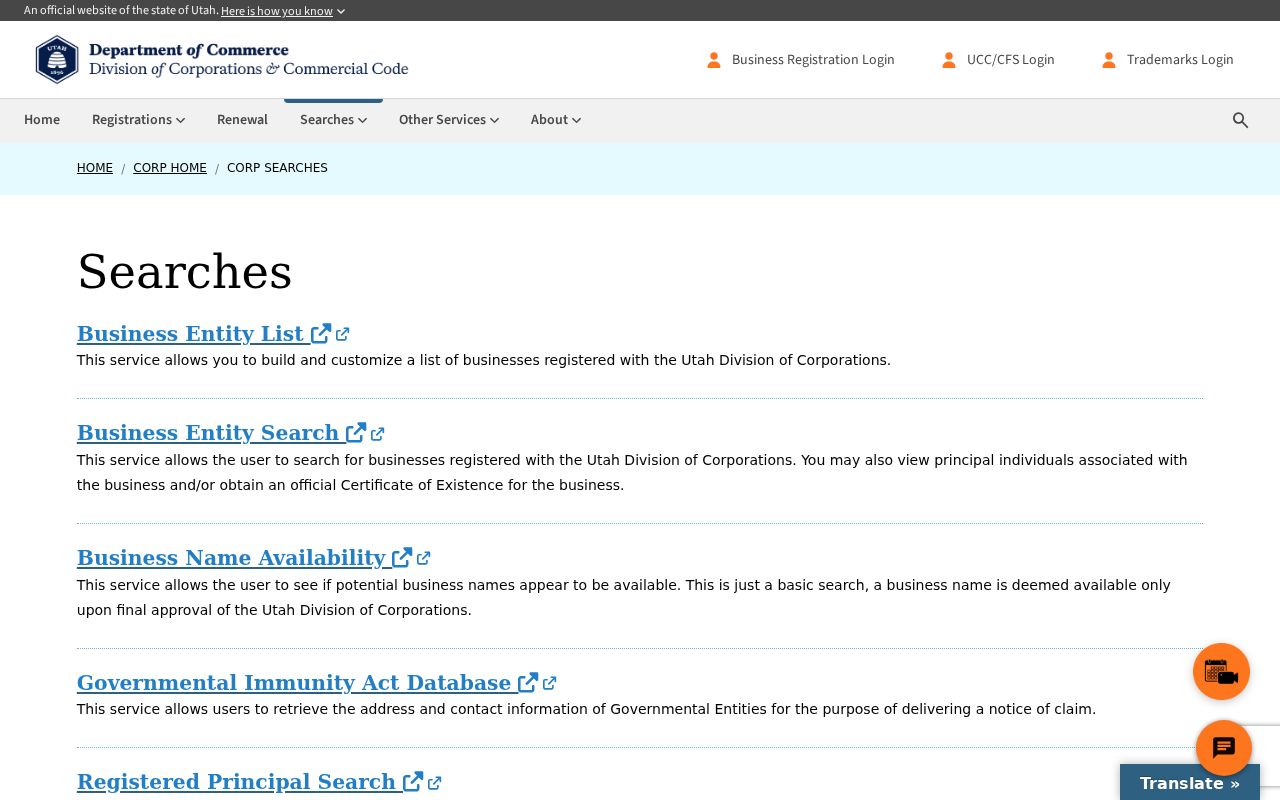
The business-search capture shows the entity route, which is useful when a person is tied to a public filing.
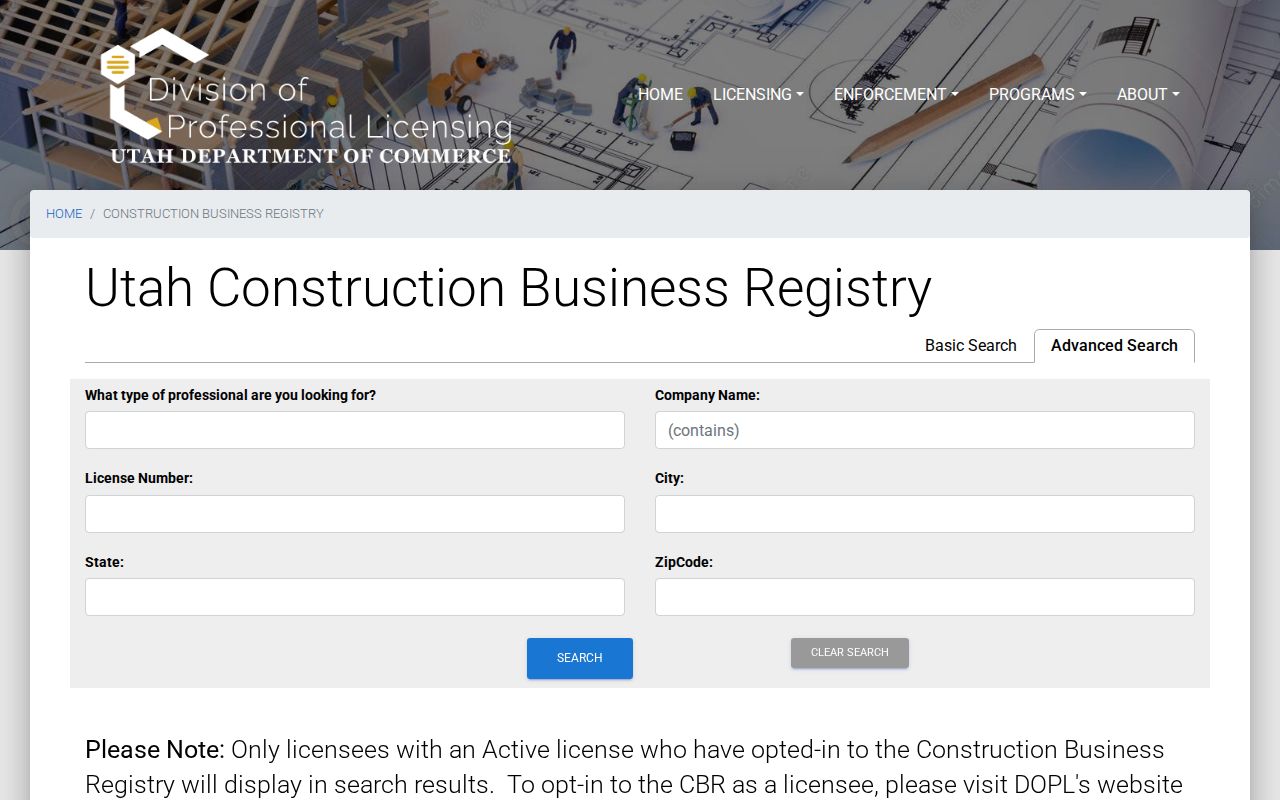
The DOPL capture shows a separate license path with active opted-in coverage and a public ZIP field.
Historical Orem Directory Leads
For former residents, the Orem residents directory question becomes a dated search. Verified local leads include an Orem City Directory record for 1950, directory references used in an Orem-area property report for 1964 through 1967, and a Provo-Orem lead for 1973. The Utah City Directories collection at Marriott Library has broader date facets from 1867 through 1990, though it does not publish a complete Orem run.
Orem Public Library provides the catalog, local-history route, Utah Digital Newspapers, and a FamilySearch affiliate access point. UVU’s Orem Centennial Books preserve homesteader profiles, historic homes, sites, and city chronology. Search a directory street section, then compare the address with a deed, census year, obituary, newspaper notice, or cemetery record. A directory is a snapshot and may omit children, boarders, or people who moved between compilation and publication.
Orem ZIP Checks Before Searching
The four core Orem ZIPs in the state geography material are 84057, 84058, 84059, and 84097. Orem’s parcel ZIP layer also displays 84601 and 84604, which are associated with Provo postal geography and should be treated as edge or overlap layer data until USPS verifies the mailing address. ZIP geography does not equal a city boundary, neighborhood, precinct, or household list.
Use USPS for the mailing answer, the Orem ZIP ArcGIS service for map orientation, and the county parcel or address system for the property key. Keep the situs, mailing address, ZIP, serial, and legal description together. The city’s nine districts and 22 neighborhoods add civic context through Where I Live, but the city expressly does not provide a private block roster.
Record Terms Worth Knowing
Small terms carry large differences in an Orem residents directory search. A record index can point to an image without being the image. A map can show a parcel without proving occupancy. These definitions keep a search from overstating what a result says.
- Roll
- A list maintained for a purpose, such as property assessment or voter registration.
- Index
- A finding aid with names, dates, or document numbers. Read the underlying record when possible.
- Parcel
- A mapped unit of land with a county serial and legal description.
- Criss-cross directory
- A reverse directory organized by address or street rather than only by surname.
The recorder’s index is not a universal lien or judgment search. The assessor’s mailing line is not a household census. The voter form is not a street browser. Stating those limits makes the final finding more useful to a family researcher, an heir, or someone checking a seller’s public business identity.
When GRAMA Fills the Gap
Utah’s Government Records Access and Management Act, Utah Code Title 63G, Chapter 2, gives every person a right to inspect an ordinary public record during normal hours, subject to private, controlled, protected, restricted, court-ordered, and federal limits. Inspection is free. Copies and certain staff services can carry reasonable actual-cost charges. A written request should identify the custodian, record type, date range, address, and name with enough detail to find the record.
Section 63G-2-204 calls for a response as soon as reasonably possible and no later than ten business days, or five business days when an expedited request benefits the public rather than only the requester. The response may clarify, produce, estimate a fee, or deny with a legal citation. Send a city permit or police request to Orem, a deed request to the Recorder, voter or marriage questions to the Clerk, property questions to the Assessor, and case-file requests to the court.
Lawful personal use. Public records can help with genealogy, reconnecting, civic research, estate work, and consumer safety. Do not combine records to stalk, monitor, intimidate, or harm a person.
Choose Official Records Over Guesswork
Commercial people-finder products often combine brokered data, old address histories, marketing feeds, and public-record copies. They can merge same-name people, lag behind a change, or omit protected participants. An official custodian may still have limits, but the source has a defined purpose and a correction path.
| Need | Best first source | What to verify next |
|---|---|---|
| Parcel owner | Assessor and parcel map | Recorder deed image and legal description |
| Individual registration | Utah Voter Search | Current privacy and address rules |
| Public case | Xchange or Orem Justice Court | Case number, role, disposition, and public documents |
| Past household | Directory, census, and newspaper | Deed, obituary, probate, or cemetery evidence |
For suspicious offers, type official URLs yourself. Utah Commerce warns about fake unclaimed-property texts, and the Recorder’s fee page is the counter-check for deed-copy solicitations. Verify a record with the office that holds it before passing it on.
Current Orem Resident Sources
No single current Orem residents directory covers owners, voters, occupants, court parties, and historical households at once. The sources below are purpose-built. The county property roll is strongest for parcel ownership, the voter form is strongest for one registration match, and the city staff directory is only a contact tool. Community and historical sources can add context, but they should not be mistaken for a complete list of residents.
| Source | What it can show | Keeper | Access |
|---|---|---|---|
| Property roll | Owner, parcel, mailing context | Utah County Assessor | Online land records |
| Voter match | Specific registration and polling context | Utah elections | Six-field lookup |
| Recorder index | Parties to recorded instruments | Utah County Recorder | Free index, paid copies |
| City records | Officials, applicants, contractors, civic participants | Orem City | Portal or GRAMA |
| Historical collections | Past names, addresses, notices | Libraries and archives | Catalog, scan, or staff request |
Use the Orem resident lookup workflow when the question is about one person. Use the address-focused page when the goal is a street or parcel. That division keeps a current owner lead from being overstated as proof of residence.
Orem’s Record Trail in Time
Utah County official records reach from 1870 to the present. The name index is handwritten from 1870 through January 1978, then computerized, while abstracts have a separate handwritten and typed period through September 1985 with an overlapping computerized range. That split explains why an older name search may need books, microfilm, abstracts, legal descriptions, or an office visit.
Orem’s historical trail also runs through early Utah County vital registers from 1898 to 1905, public census images through 1950 under the 72-year rule, Orem Geneva Times coverage reported from 1945 to 2009, and UVU local-history collections. The stable method is simple: preserve the address, record the date, name the custodian, and separate an index lead from a certified copy. For the street-by-street chain, use the Orem street directory; for one person, use the Orem resident lookup workflow.