
Orem Resident Lookup Sources
Different records confirm different facts. The Utah County Assessor can connect a current owner to a parcel, but a mailing address is not proof of occupancy. The voter form can match a named person to registration and polling information, but it is not a street roster. Xchange can show a public case, but a same-name docket needs a court, date, role, or case-number check. A vital certificate proves an event only when the requester meets the access rule.
| Record | What it can confirm | Where | Access limit |
|---|---|---|---|
| Property record | Owner, parcel, situs and mailing context | Utah County Assessor | Not every occupant |
| Voter match | Specific registration and polling context | Utah Voter Search | Six fields, privacy rules |
| Court index | Public case, party role, outcome | Xchange / Orem Justice Court | Sealed and protected matters absent |
| Vital record | Birth, death, marriage, or divorce event | OVRS / Utah County Health | ID, relation, time, fee |
| Business or license | Entity principal or license status | Utah Commerce / DOPL | Business address is not a home |
| Historical source | Past address, family, school, or death clue | Library, archives, UVU | Dated and authored |
Orem Resident Lookup Fields
The Utah Voter Search asks for first name, last name, date of birth, street address, city, and ZIP. It runs an individual match and requires JavaScript. It does not provide a public street browse. Use an exact name first, then consider initials, maiden or married names, and address variants. Treat a no-match as inconclusive if the registration is private, protected, recent, stale, or entered with a different spelling.
| Field | Role in a resident lookup |
|---|---|
| First and last name | Find the indexed person; test name order and variants. |
| Date of birth | Separates people with the same name. |
| Street address | Tests the entered residence match. |
| City and ZIP | Narrows the address and mailing geography. |
| Submit | Runs the match; output depends on the live system. |
Public data can include legal name, voter ID, age range, addresses, county, precinct, districts, party or unaffiliated status, active status, last update, and vote history. Full DOB, SSN, driver or state ID, email, phone, and signature are private. At-Risk voters are excluded. Because SB153 changed the privacy transition on May 25, 2026, check the current Utah voter privacy page.
Verify an Orem Resident Lookup
A careful resident lookup moves from a known name to independent records. Start with the county owner search when property is part of the question. Compare name order, middle initial, parcel serial, situs, mailing address, and update context. Next, use the individual voter match only when the person-specific details are appropriate. Then check Xchange for a public case, Utah Commerce for an entity, or DOPL for a license. Save the date and URL for every result.
- Write the person’s known name, Orem connection, date range, and purpose.
- Search owner records and record parcel, mailing, situs, and serial details.
- Run the six-field voter match without treating it as a roster.
- Compare a court case number, role, court, filing date, and outcome.
- Confirm the finding with a second source or ask the custodian for correction or a certified copy.
The goal is not to collect every possible mention. It is to decide whether two records describe the same person and to state the limits that remain.
Orem Resident Lookup Court Results
Utah Courts Xchange covers Utah district and justice courts. A public result may show court and location, caption, case number, case type, parties and roles, attorneys, judge, filing date, proceedings, hearings, docket or minute entries, documents, judgments, and disposition. Small-claims history is available from 2009, while district electronic documents filed since July 1, 2010 are generally available. Older or limited material may require a courthouse terminal or clerk request.
Use the case number as the strongest anchor. A docket is a running case history, not every filing. Sealed adoptions, juvenile delinquency, child-welfare, expunged matters, civil commitments, and protected domestic or civil information are not open in the same way. The Orem Justice Court is at 97 E Center St, phone 801-724-3900. Federal records use PACER, not Xchange.
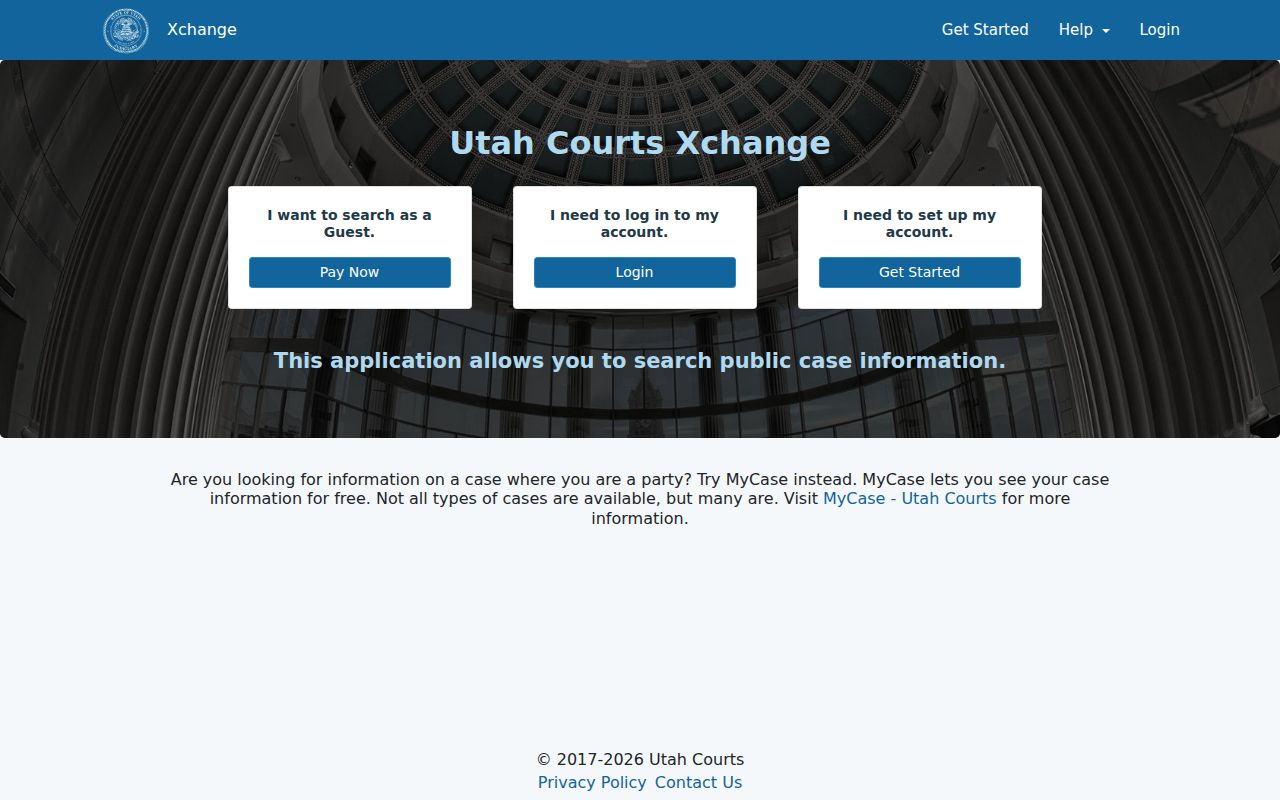
The Xchange capture highlights the statewide case route and public-access notice.
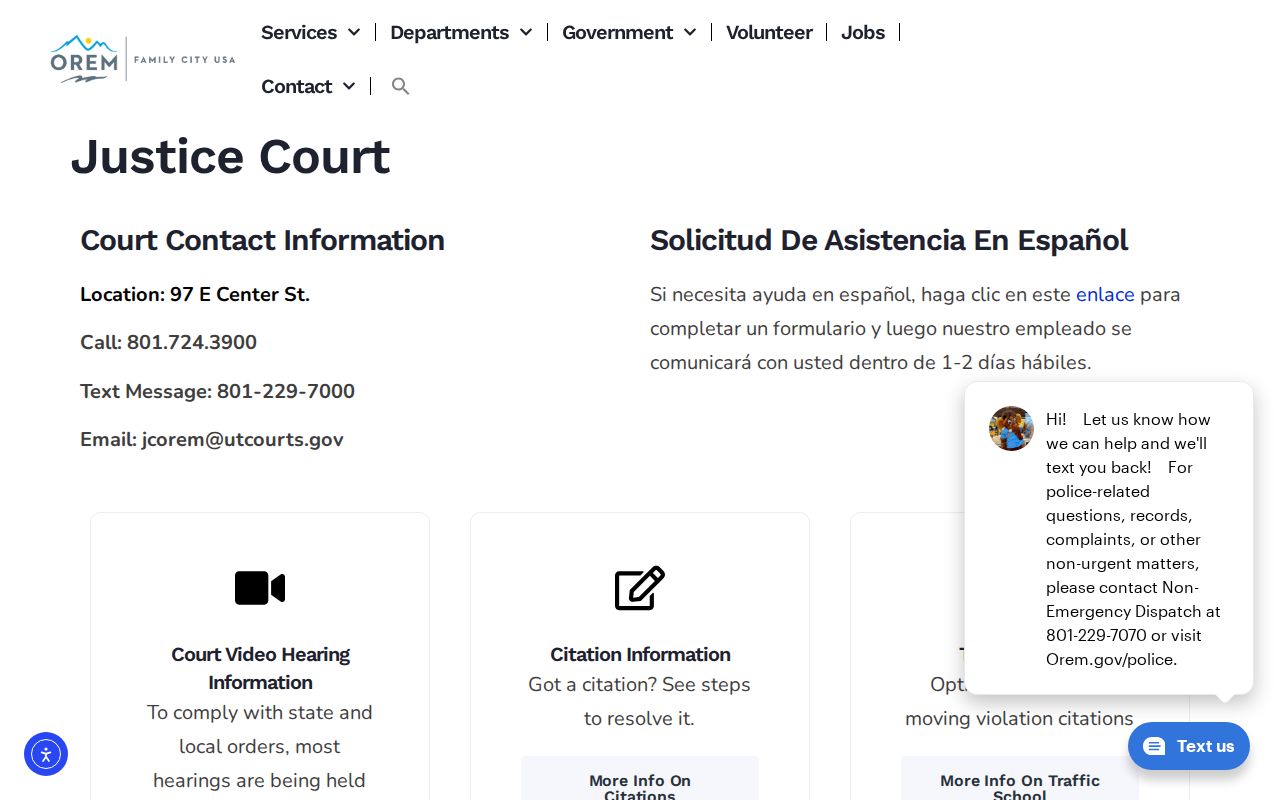
The Orem Justice Court capture identifies the local court route when a statewide index needs a location-specific follow-up.
- Docket
- A chronological case record showing filings, hearings, and actions.
- Disposition
- The result or outcome recorded for a case or charge.
- Index versus image
- An index points to a record; an image or file contains the underlying document.
Orem Resident Lookup Property Records
The Utah County owner search accepts LAST, FIRST MIDDLE and current, all, or never-valid record choices. The parcel map can add address, owner, serial, legal description, value, tax, appraisal, subdivision, and map context. A grantor or grantee in a deed may be a person, trust, estate, lender, or organization. A mailing address may sit outside Orem. A homestead or exemption indicator can be a clue where visible, but not a universal occupancy certificate.
For a deed or legal interest, open the Recorder path and inspect entry number, year, book/page, instrument type, parties, legal description, and scanned image or abstract. The Recorder’s official record range is 1870-present, with a handwritten name index through January 1978 and a computerized index from January 1978 forward. Search both routes when an older result is missing.
Orem Resident Lookup Vital Rules
Utah County’s marriage search can show applicant, spouse, and ceremony date, but a certificate request asks for the issuing county, place and date, names and birth details, requester relationship, reason, contact information, ID, and payment. The county office is at 88 W 100 N, Provo, phone 801-851-7005. A divorce record belongs to the court and should begin with Xchange or the court clerk.
Utah Code §26B-8-125 opens birth records after 100 years, death records after 50 years, and other vital records after 75 years, subject to exceptions. Current certificates are not a general resident directory. For a death beyond the opening period, check State Archives. Older Utah County series include birth and death registers from 1898-1905 and marriage-license applications. Do not use a historical rule as a substitute for eligibility on a current certificate.
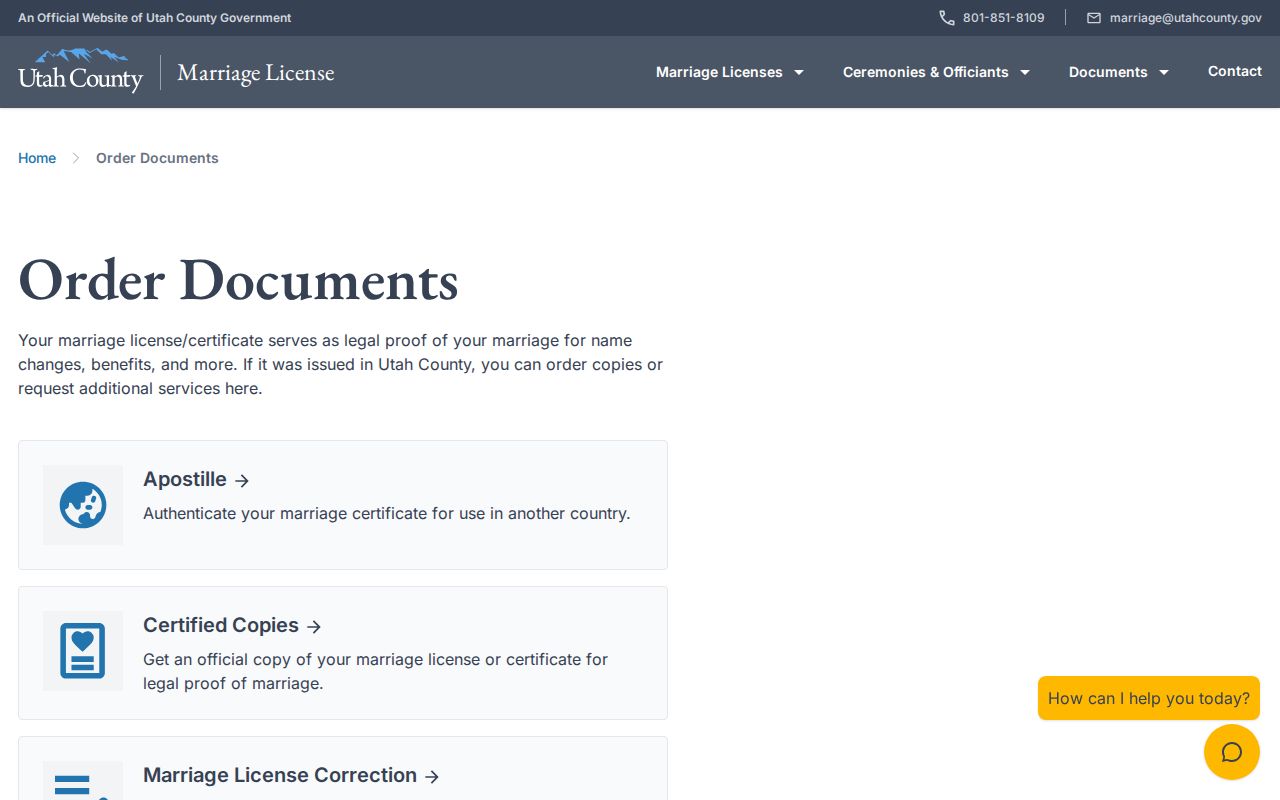
The marriage-result capture is an index lead, so the event date and relationship gate still matter.
Find an Heir or Classmate
An heir search can combine a deed or estate filing, probate case, obituary, marriage or death link, and a newspaper notice. An obituary may name family, funeral home, cemetery, or a former Orem address. Probate may identify an heir or representative, but private addresses can be redacted. A former classmate may be better served by Orem or UVU yearbooks, reunion notices, the Orem Geneva Times archive, or library and archives collections than by a present-day record.
The Orem newspaper route covers names, addresses, school and church notices, civic activity, business ads, and obituaries in reported 1945-2009 material. UVU Archives has yearbooks, oral histories, personal papers, photographs, and community publications. FamilySearch provides catalog searches by place, title, author, subject, surname, and online availability. Each source is dated and may need a second check.
Business and License Checks
When the person is tied to a public entity, search Utah Commerce for entity and principal records. Results can show status, filing dates, registered agent, principals, and addresses. The DOPL construction registry has basic and advanced routes with company name, license number, city, state, ZIP, profession, and classification fields. It covers active opted-in construction licensees only. An entity address is not automatically a residence.
Use a business result as one identity clue. Compare principal name, Orem connection, filing date, license status, and a separate property, court, or historical record. For errors, contact Commerce or DOPL rather than copying the claim into a resident profile.
When the Online Trail Stops
Use Utah’s Government Records Access and Management Act, Title 63G Chapter 2, for a narrow written request when the needed record is held by Orem, Utah County, or another public custodian. Section 63G-2-201 provides inspection rights for public records, subject to protected classifications. Section 63G-2-203 allows reasonable actual-cost charges. Section 63G-2-204 calls for a response within ten business days, or five business days for a qualifying public-benefit expedited request.
Name the custodian: Orem City Recorder for city administration, police records for a specific incident, County Recorder for a deed, Assessor for property, Clerk or Elections for voter and marriage records, and the court clerk for a case file. Ask for electronic delivery, a fee estimate, and the exact classification if access is denied. A request for “everything about a person” is less useful than a date, address, record type, and name.
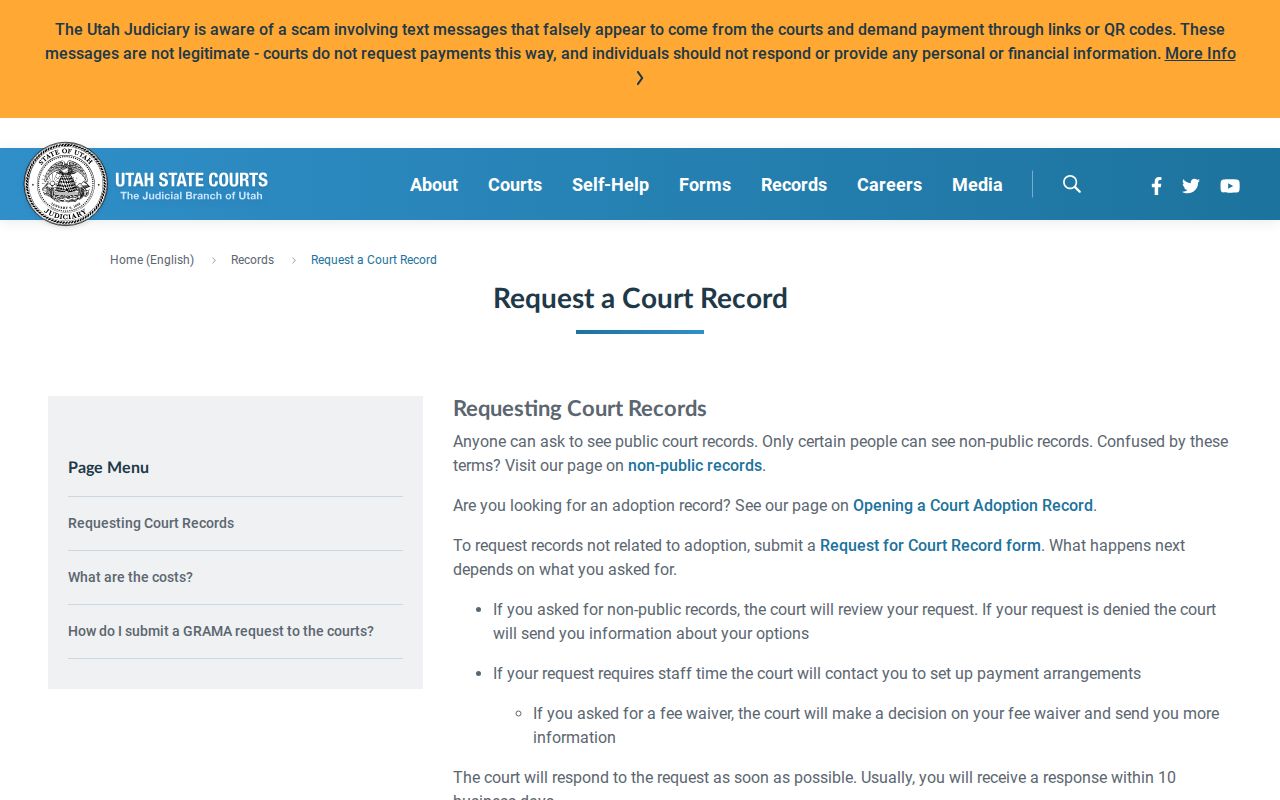
The court-request capture supplies the fallback when a public docket does not expose the needed file.
Protected People and Lawful Use
Safe at Home gives qualifying Utah participants a substitute address. At-Risk voters, private voter fields, sealed cases, juvenile matters, protected vital information, and DMV data have separate limits. The federal DPPA blocks a casual DMV address search. Utility, delivery, and private association lists are not public resident sources. A missing result can be a privacy feature rather than a search failure.
Use with care. An Orem resident lookup supports genealogy, reconnection, estate research, civic understanding, and personal safety awareness. Do not use public records to stalk, monitor, intimidate, threaten, or harm anyone.
Do not present a commercial profile as a certified deed, voter file, court disposition, or vital certificate. If a record is wrong, preserve its URL, date, search terms, and document number, then ask the named custodian to correct it. For street-level neighbors, use the Orem street directory only when the question shifts from one person to a whole address.